Jingdezhen & Lushan: Porcelain Capital & Misty Mountain
Jingdezhen\'s 1,000-year-old kilns, hands-on porcelain workshops, and Lushan — the mountain where China\'s leaders held secret meetings in colonial stone villas.
4-5 Days
The perfect pace for Jiangxi's two gems — two days in the porcelain capital, two days on the misty mountain.
Jingdezhen → Lushan → Nanchang
Connected by 2-hour high-speed trains. Jingdezhen and Nanchang both have airports with domestic connections.
Ancient Kilns, Porcelain Workshops, Lushan Villas
1,000 years of porcelain history, hands-on pottery, and a mountain resort with colonial villas.
The Journey
Jingdezhen (景德镇) has produced the world\'s finest porcelain for 1,000 years. The imperial kilns supplied every Chinese emperor from the Song to the Qing dynasty, and \'china\' (porcelain) is named after \'China\' for a reason — Jingdezhen\'s exports defined how the world saw Chinese craftsmanship. Today the city is a fascinating mix of ancient kilns, artist studios, and a thriving contemporary ceramics scene. Lushan (庐山), 2 hours north, is a mountain resort where missionaries, colonialists, and later China\'s communist leaders built stone villas in the cool mountain air. Mao held the 1959 Lushan Plenum here, where he purged Peng Dehuai for criticising the Great Leap Forward.
Day 1: Arrive Jingdezhen
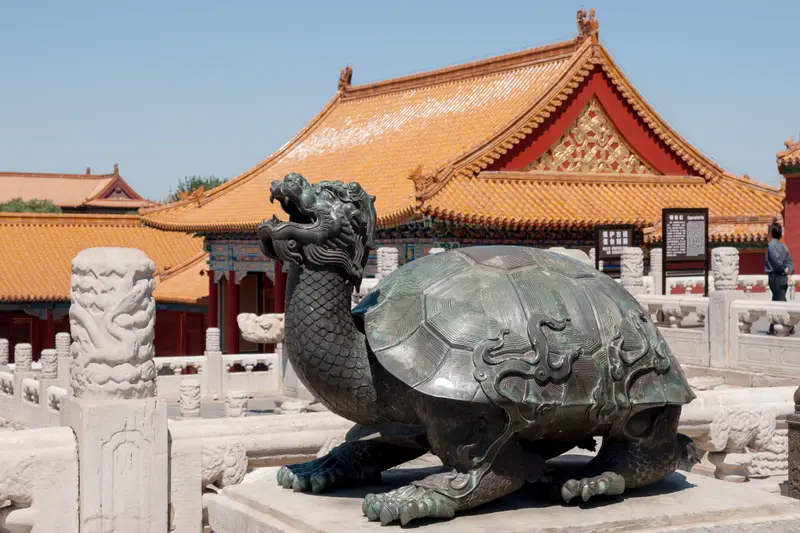
Fly into Jingdezhen Luojia Airport (JDZ) or take the high-speed train from Shanghai (4 hrs), Hangzhou (3 hrs), or Nanchang (1 hr). Afternoon: Jingdezhen Ceramic History Museum (景德镇陶瓷博物馆, free) — the world's largest ceramics museum, covering the history of Chinese porcelain from the Neolitic to the present. The museum building is a replica of a Song dynasty kiln. Evening: walk the Ancient Kiln Folk Customs Museum area (古窑民俗博览区, a modest entrance fee) — a reconstructed Ming-Qing kiln village with working potters demonstrating traditional techniques.
Local tip: The Ancient Kiln Folk Customs Museum (ticketed) is touristy but worthwile — you watch master potters throw porcelain on kick-wheels, paint blue-and-white designs, and fire wood kilns. The potters are genuine craftspeople, not actors. You can buy their work — a hand-painted teacup costs very little directly from the maker and makes for an authentic, meaningful souvenir.
Day 2: Jingdezhen — Porcelain Immersion
Morning: visit a porcelain workshop for a hands-on experience. The Pottery Workshop (乐天陶社) in the Sculpture Factory area runs half-day classes where you throw a bowl on a wheel, paint blue-and-white designs, and fire your piece (it can be shipped to your home, with international shipping easily arranged). Afternoon: explore the Sculpture Factory area (雕塑瓷厂) — a former state-owned factory turned into a creative park of artist studios, galleries, and cafes. Saturday mornings have the best creative market in China (乐天集市, 8am-12pm) — young ceramic artists selling their work. Evening: Taoxichuan (陶溪川) — a former state porcelain factory turned into a cultural district of galleries, design shops, and restaurants in red-brick industrial buildings.
Local tip: The Saturday morning Creative Market (乐天集市) at the Sculpture Factory is the best time to be in Jingdezhen — 100+ young ceramic artists selling their work, from affordable earings to gallery-quality vases. The market runs 8am-12pm. Arrive early — the best pieces sell in the first hour. This is where Chinese galleries scout new talent.
Day 3: Jingdezhen → Lushan
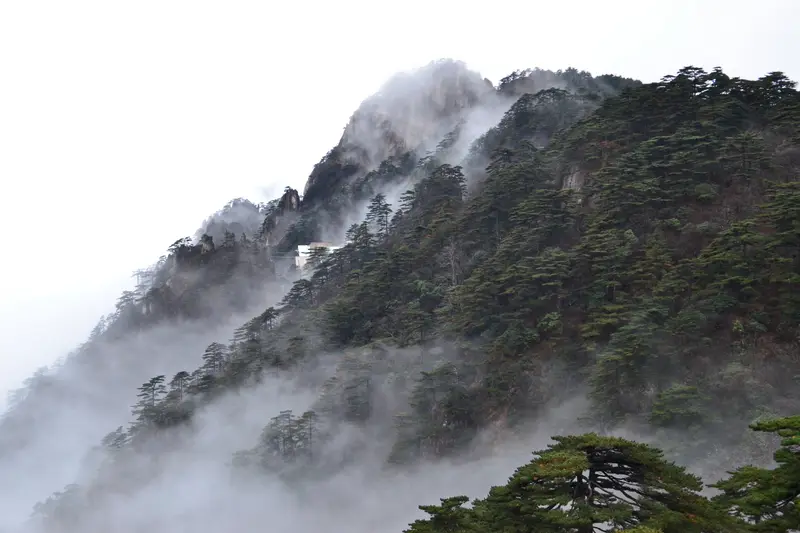
Take the 2-hour high-speed train from Jingdezhen North to Jiujiang, then 1-hour bus up the mountain to Lushan (庐山, entrance fee applies plus shuttle bus). Lushan is a mountain resort at 1,100m where missionaries built stone villas in the late 19th century and China's leaders followed. The mountain has over 600 villas representing 18 countries' architectural styles. Check into a hotel (converted villa or modern). Afternoon: walk the villa trail — visit the Meilu Villa (美庐, a small entrance fee), the former summer residence of Chiang Kai-shek and later Mao Zedong. The villa is preserved as it was when Mao stayed here in 1959, with his bedroom and study intact. Evening: Lushan speciality — stone fish (石鱼), tiny fish from the mountain streams, and stone ear fungus (石耳).
Local tip: Lushan entrance: ticketed, with a separate shuttle bus fee. The mountain has a permanent population of 20,000 and a town (Guling, 牯岭镇) at the summit with hotels, restaurants, and shops. The temperature at 1,100m is 8-10°C cooler than the plains — Lushan has been a summer escape for 100 years. The mountain is often in clouds — embrace the mist.
Day 4: Lushan
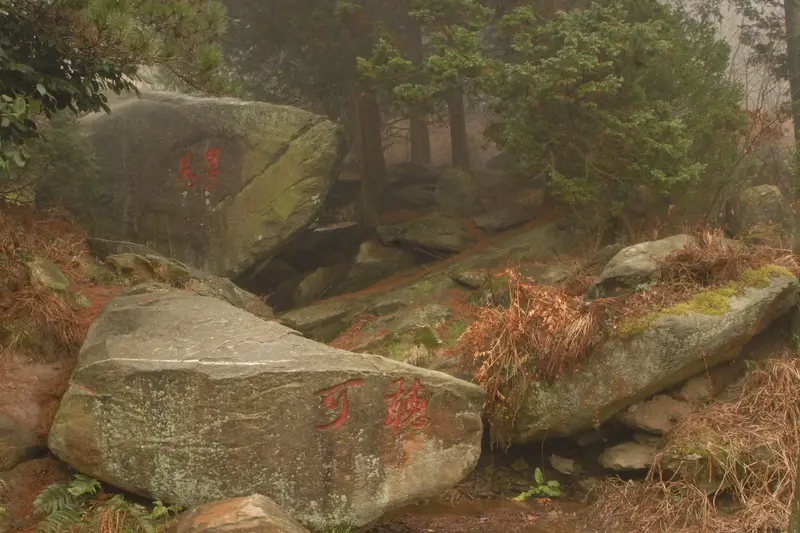
Full day hiking Lushan. The mountain's main sights are waterfalls, peaks, and the views of the Yangtze River and Poyang Lake from the summit. Visit the Three-Step Waterfall (三叠泉, a modest entrance fee) — Lushan's most famous waterfall, descending in three cascades over 155m. The hike is 3,000+ steps down to the base and back up — hard work but worth it. Then the Immortal's Cave (仙人洞) — a natural cave where a Daoist immortal supposedly lived, with a view over a sea of clouds. Lushan is also famous for its 'cloud tea' (云雾茶) — tea grown in the mountain mist, one of China's top 10 teas. Visit a tea plantation for a tasting.
Local tip: The Three-Step Waterfall (三叠泉) is a 3,000-step descent (and climb back up). The steps are steep and uneven. A cable car covers the flatter approach but you still have to climb 1,500+ steps to the base. Go early morning (7am) to avoid the crowds. The waterfall is most powerful after rain.
Day 5: Lushan → Nanchang → Depart
Morning: final Lushan walk — the Brocade Valley (锦绣谷) is a 1.5 km cliffside path through misty peaks and rock formations, ending at the Immortal's Cave. Then descend the mountain by bus (1 hr) to Jiujiang. Train from Jiujiang to Nanchang (1 hr) for your flight out. If you have time in Nanchang: visit the Tengwang Pavillion (滕王阁, a modest entrance fee) — a Tang dynasty pavillion on the Gan River, one of China's 'Four Great Towers', or the Nanchang Star (南昌之星, ticketed) — a 160m Ferris wheel with views over the city.
Local tip: Nanchang is Jiangxi's capital and a transport hub. The airport (KHN) has flights to most major Chinese cities. The Tengwang Pavillion is a 1989 reconstruction (the original was destroyed 28 times over 1,300 years) — it is historically inauthentic but architecturally impressive.
This is a suggested itinerary. Every journey we design is tailored to your interests, pace, and budget.
Ready to Plan Your China Journey?
Tell us about your dream trip. We will send you a personalized proposal — no obligation, no pressure.
Or call us: +44 20 XXXX XXXX